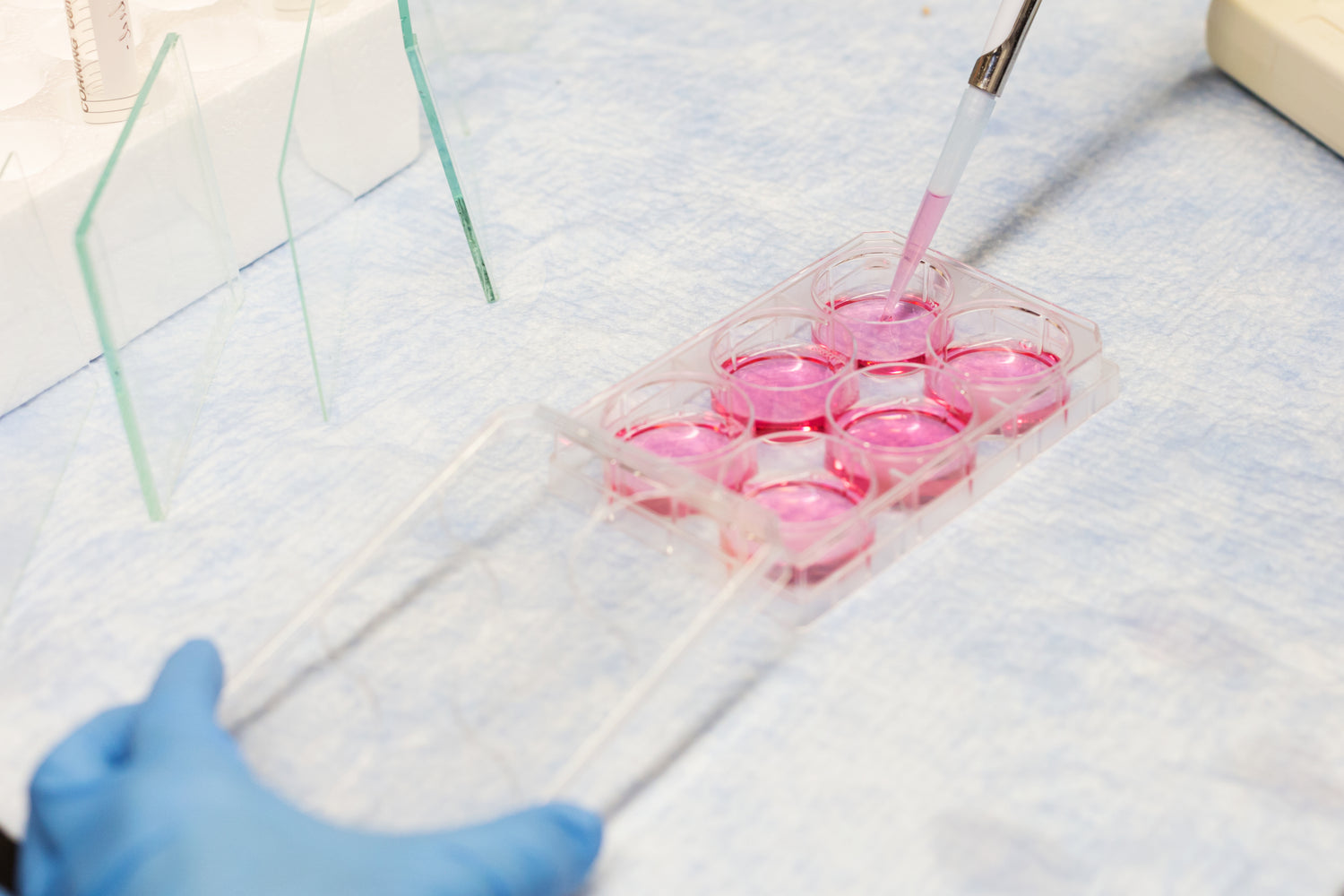
Nanoemulsions, as thermodynamically stable colloidal dispersions, are widely used in pharmaceuticals, food, cosmetics, and other fields due to their advantages such as uniform particle size, good biocompatibility, and strong targeting. The key to preparing high-quality nanoemulsions lies in selecting efficient emulsification technology. Ultrasonic emulsification equipment, with its unique working principle and significant technological advantages, has become one of the core pieces of equipment in the current field of nanoemulsion preparation.
The core working principle of ultrasonic emulsification equipment is based on the cavitation effect generated when ultrasound propagates in a liquid medium. When ultrasound acts on an oil-water mixture, a large number of tiny bubbles are continuously generated inside the liquid. These bubbles rapidly expand and burst under the action of ultrasound. The bursting of bubbles releases enormous energy, creating a localized high-temperature, high-pressure environment, while simultaneously generating strong shock waves and shear forces. This powerful shear force can rapidly break the oil or water phase materials into tiny droplets, while the shock waves promote thorough mixing of the two phases, ultimately forming a nanoemulsion with uniform particle size and high stability. Compared to traditional mechanical stirring emulsification equipment, ultrasonic emulsification equipment achieves nanoscale emulsification without complex mechanical structures, and the emulsification process is gentler, less likely to damage the active ingredients of the materials.

The process of preparing nanoemulsions using ultrasonic emulsification equipment is simple and efficient, typically including four steps: raw material pretreatment, mixing, ultrasonic emulsification, and post-treatment. First, the oil and water phase raw materials are purified and preheated to ensure that the purity and flowability meet requirements. Then, the oil and water phase materials are added to an emulsification tank in a certain proportion for preliminary mixing to form a coarse emulsion system. Next, the ultrasonic emulsification equipment is started, and the ultrasonic frequency, power, and treatment time are adjusted according to the material characteristics, allowing the coarse emulsion to be transformed into a nanoemulsion under the action of cavitation. Finally, post-treatment processes such as filtration and sterilization yield the finished nanoemulsion that meets application requirements. The entire preparation process is easy to control; by adjusting equipment parameters, the particle size and distribution range of the nanoemulsion can be flexibly controlled to meet the application needs of different fields.
In practical applications, the technological advantages of ultrasonic emulsification equipment are fully demonstrated. In the pharmaceutical field, drug nanoemulsions prepared using this equipment can significantly improve drug solubility and bioavailability, reduce drug dosage, and lower toxicity and side effects. In the food industry, it can be used to prepare nanoscale fortified emulsions, enhancing the absorption efficiency of nutrients. In the cosmetics field, nanoemulsion base materials can better penetrate the stratum corneum of the skin, enhancing the efficacy of skincare ingredients. Furthermore, ultrasonic emulsification equipment is characterized by its ease of operation, low energy consumption, and low pollution, aligning with the trend of green production.
With the continuous development of nanomaterials technology, higher demands are being placed on the precision and efficiency of nanoemulsion preparation. Ultrasonic emulsification equipment, with its unique cavitation effect mechanism and excellent emulsification performance, has a promising future in the field of nanoemulsion preparation. In the future, through optimization of equipment structure, upgrades to the power regulation system, and integration with other technologies, ultrasonic emulsification equipment will further improve the quality and production efficiency of nanoemulsion preparation, providing strong support for technological innovation and product upgrades in various industries.